
Skip the Splitter
Metoprolol Tartrate Tablets, USP 12.5 mg — a whole-tablet strength that removes the tablet-splitter from the dispensing workflow
Learn MoreAvailable in Pharmacies
Actor Potrayal
The information contained in this site is intended for U.S. Healthcare Professionals only.
Click “OK ” to confirm that you are a U.S. Healthcare Professional
This site is for U.S. Healthcare Professionals Only
Metoprolol Tartrate Tablets, USP 12.5 mg — a whole-tablet strength that removes the tablet-splitter from the dispensing workflow
Learn MoreAvailable in Pharmacies
Actor Potrayal
12.5 mg tablet allows personalized treatment to meet each patient’s needs
Learn MoreActor Potrayal
Actor Potrayal
12.5 mg tablet offers a lower-strength option that eliminates the need to split tablets
Dosage may be titrated based on tolerability and hemodynamic parameters (i.e., heart rate, blood pressure)
Lower-strength option may facilitate step-down dosing
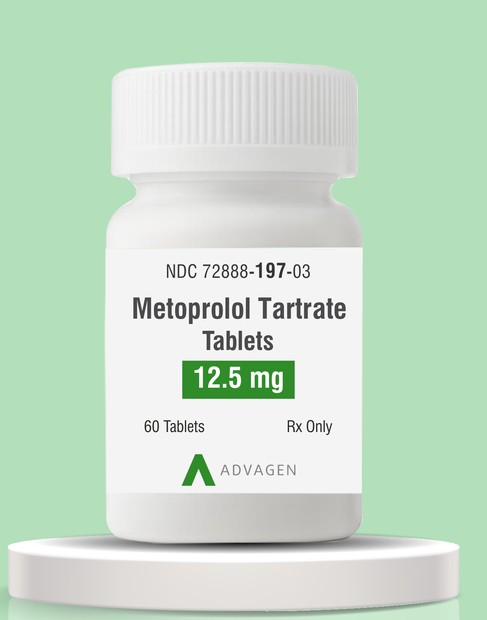
NDC 72888-197-03 • 60-count bottles • Rx Only
Stocked through major U.S. pharmaceutical distributors. Speak with a rep for account-specific availability.
Ordering DetailsMetoprolol Tartrate tablets is a beta-adrenergic blocker indicated in the treatment of hemodynamically stable adult patients with myocardial infarction to reduce the risk of cardiovascular mortality.
Please click here for full Prescribing Information.
The recommended starting dose in hemodynamically stable patients is 50 mg orally every 6 hours.
If intolerance occurs, reduce to 25 mg orally every 6 hours and continue treatment for 48 hours.
The maximum daily maintenance dosage is 100 mg orally twice daily.
Adjust dosage based on tolerability, heart rate, and blood pressure, as outlined in the Prescribing Information.
Most common adverse reactions in the setting of treatment of myocardial infarction are hypotension and bradycardia.
The following adverse reactions are described elsewhere in labeling:
Please click here for full Prescribing Information.
Actor Potrayal
Available now through major U.S. distributors.
Speak with your wholesaler or contact an Advagen representative for account-specific stocking, pricing, and availability details.
Metoprolol Tartrate Tablets is a beta-adrenergic blocker indicated in the treatment of hemodynamically stable adult patients with myocardial infarction to reduce the risk of cardiovascular mortality.
The recommended starting dose in hemodynamically stable patients is 50 mg orally every 6 hours. Metoprolol Tartrate Tablets should be taken with or immediately following meals. The maximum daily maintenance dosage is 100 mg orally twice daily.
Metoprolol Tartrate Tablets is contraindicated in severe bradycardia, second or third degree heart block, cardiogenic shock, systolic blood pressure <100, decompensated heart failure, sick sinus syndrome (unless a permanent pacemaker is in place), and in patients who are hypersensitive to any component of this product.
Following abrupt cessation of therapy with certain beta-blocking agents, exacerbations of angina pectoris and, in some cases, myocardial infarction have occurred. When discontinuing chronically administered Metoprolol Tartrate Tablets, gradually reduce the dosage over a period of 1 to 2 weeks and monitor the patient. Warn patients not to interrupt therapy without their physician’s advice.
Worsening cardiac failure may occur during up-titration of Metoprolol Tartrate Tablets. If such symptoms occur, increase diuretics and restore clinical stability before advancing the dose of Metoprolol Tartrate Tablets. It may be necessary to lower the dose of Metoprolol Tartrate Tablets or temporarily discontinue it. Such episodes do not preclude subsequent successful titration of Metoprolol Tartrate Tablets.
Patients with bronchospastic disease, should in general, not receive beta-blockers, including Metoprolol Tartrate Tablets. Because of its relative beta1 cardio-selectivity, however, Metoprolol Tartrate Tablets may be used in patients with bronchospastic disease who do not respond to, or cannot tolerate, other antihypertensive treatment. Because beta1-selectivity is not absolute, use the lowest possible dose of Metoprolol Tartrate Tablets. Bronchodilators, including beta2-agonists, should be readily available or administered concomitantly. Pheochromocytoma
If Metoprolol Tartrate Tablets is used in the setting of pheochromocytoma, it should be given in combination with an alpha blocker, and only after the alpha blocker has been initiated. Administration of betablockers alone in the setting of pheochromocytoma has been associated with a paradoxical increase in blood pressure due to the attenuation of beta-mediated vasodilatation in skeletal muscle.
Avoid initiation of a high-dose regimen of beta blocker therapy in patients undergoing non-cardiac surgery, since such use in patients with cardiovascular risk factors has been associated with bradycardia, hypotension, stroke and death.
Chronically administered beta-blocking therapy should not be routinely withdrawn prior to major surgery, however, the impaired ability of the heart to respond to reflex adrenergic stimuli may augment the risks of general anesthesia and surgical procedures.
Beta-blockers may prevent early warning signs of hypoglycemia, such as tachycardia, and increase the risk for severe or prolonged hypoglycemia at any time during treatment, especially in patients with diabetes mellitus or children and patients who are fasting (i.e., surgery, not eating regularly, or are vomiting). If severe hypoglycemia occurs, patients should be instructed to seek emergency treatment.
Beta-adrenergic blockade may mask certain clinical signs of hyperthyroidism, such as tachycardia. Abrupt withdrawal of beta-blockade may precipitate a thyroid storm.
While taking beta-blockers, patients with a history of severe anaphylactic reaction to a variety of allergens may be more reactive to repeated challenge, either accidental, diagnostic, or therapeutic. Such patients may be unresponsive to the usual doses of epinephrine used to treat allergic reaction.
Beta-blockers can precipitate or aggravate symptoms of arterial insufficiency in patients with peripheral vascular disease.
The following adverse reactions are described elsewhere in labeling:
Most common adverse reactions in the setting of treatment of myocardial infarction are hypotension and bradycardia.
Observe patients treated with Metoprolol Tartrate Tablets plus a catecholamine depletor for evidence of hypotension or marked bradycardia, which may produce vertigo, syncope, or postural hypotension. Catecholamine depleting drugs (e.g., reserpine, monoamine oxidase (MAO) inhibitors) may have an additive effect when given with beta-blocking agents.
The cardiostimulating and bronchodilating effects of epinephrine are antagonized by beta-adrenergic blocking drugs, such as metoprolol. Higher doses of epinephrine might be necessary for patients taking metoprolol.
Monitor patients closely when the combination use of CYP2D6 inhibitor and metoprolol cannot be avoided. Drugs that are strong inhibitors of CYP2D6 such as quinidine, fluoxetine, paroxetine, and propafenone were shown to double metoprolol concentrations. While there is no information about moderate or weak inhibitors, these may also increase metoprolol concentration. Increases in plasma concentration decrease the beta1 cardioselectivity of metoprolol.
If clonidine and metoprolol are coadministered, withdraw the beta-blocker several days before the gradual withdrawal of clonidine because metoprolol may exacerbate the rebound hypertension that can follow the withdrawal of clonidine. If replacing clonidine with metoprolol, delay the introduction of metoprolol for several days after clonidine discontinuation.
Digitalis glycosides, clonidine, diltiazem, and verapamil slow atrioventricular conduction and decrease heart rate. Concomitant use with beta blockers can increase the risk of bradycardia.
Untreated myocardial infarction during pregnancy can lead to adverse outcomes for the mother and the fetus. In animal reproduction studies, metoprolol has been shown to increase post- implantation loss and decrease neonatal survival in rats at oral dosages of 500 mg/kg/day, approximately 11 times the daily dose of 450 mg in a 60-kg patient on a mg/m2 basis.
Metoprolol crosses the placenta. Neonates born to mothers who are receiving metoprolol during pregnancy, may be at risk for hypotension, hypoglycemia, bradycardia, and respiratory depression. Observe neonates and manage accordingly.
No adverse reactions of metoprolol on the breastfed infant have been identified. There is no information regarding the effects of metoprolol on milk production.
Based on the published literature, beta blockers (including metoprolol) may cause erectile dysfunction and inhibit sperm motility. In animal fertility studies, metoprolol has been associated with reversible adverse effects on spermatogenesis starting at oral dose level of 3.5 mg/kg in rats, which would correspond to a dose of 34 mg/day in humans in mg/m2 equivalent, although other studies have shown no effect of metoprolol on reproductive performance in male rats. No evidence of impaired fertility due to metoprolol was observed in rats.
Safety and effectiveness of Metoprolol Tartrate Tablets have not been established in pediatric patients.
In general, use a low initial starting dose in elderly patients given their greater frequency of decreased hepatic, renal, or cardiac function, and of concomitant disease or other drug therapy.
No studies have been performed with Metoprolol Tartrate Tablets in patients with hepatic impairment.
The systemic availability and half-life of metoprolol in patients with renal failure do not differ to a clinically significant degree from those in normal subjects. No reduction in dosage is needed in patients with renal failure.
Tablets 12.5 mg - pink colored film coated, round, biconvex tablets debossed with “^E” on one side and plain on the other side.
Overdosage of Metoprolol Tartrate Tablets may lead to severe bradycardia, hypotension, and cardiogenic shock. Clinical presentation can also include: AV block, heart failure, bronchospasm, hypoxia, impairment of consciousness/coma, nausea and vomiting.
To report SUSPECTED ADVERSE REACTIONS, contact Advagen Pharma Ltd, at +1 (866)-488-0312 or FDA at 1-800-FDA-1088 or www.fda.gov/medwatch.
Please see Full Prescribing Information at https://metoprolol12-5.com
©2026 MTP - 12.5-04-206 All right reserved
Please fill out the form below and we’ll contact you soon.
Thank you for your interest in Metoprolol tartrate 12.5 mg Tablets, please fill out the form below and our representative will reach out to you soon.
Your request has been sent, you can expect a response from the Advagen team soon. Thank you.